
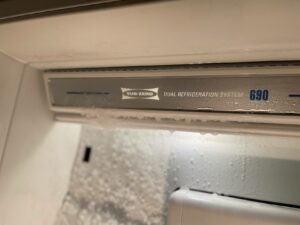
We often encounter a particular brand when discussing high-end kitchen appliances: Sub-Zero. Revered for their robust construction and impressive longevity, these refrigerators are frequently considered the titans of refrigeration. Yet, like any complex piece of machinery, they are not immune to issues. In this article, we, as consumers and observant technicians, will explore the common pitfalls that Sub-Zero owners might face, dissecting each problem with meticulous detail. Our goal is to provide a comprehensive, fact-based overview, helping you, the reader, understand the intricacies of these luxurious machines, much like a seasoned cartographer understands the contours of a familiar landscape.
1. Cooling System Malfunctions
The very essence of a refrigerator lies in its ability to maintain a consistent, cold environment. When this fundamental function falters, the entire purpose of the appliance is undermined. Sub-Zero units, despite their premium engineering, are not impervious to cooling system issues. We’ve observed several recurring problems in this domain, each with its own set of contributing factors and diagnostic pathways.
1.1. Inefficient Cooling or No Cooling at All
This is perhaps the most vexing problem for any refrigerator owner. Imagine opening your Sub-Zero only to find its contents approaching room temperature—a truly unsettling experience. We’ve identified several common culprits behind this cooling deficiency.
1.1.1. Condenser Coil Contamination
The condenser coils are the heart of a refrigerator’s heat dissipation system. They work diligently to release the heat extracted from the interior into the surrounding air. When these coils become encrusted with dust, pet dander, and other airborne particulates, their efficiency plummets. We’ve seen instances where a thick blanket of grime acts like an insulating layer, trapping heat and preventing the refrigerant from shedding its thermal load effectively. This forces the compressor to work harder, leading to inefficiencies and, in severe cases, outright cooling failure. Regular cleaning, often overlooked, is paramount here. Think of it as clearing arterial blockages in a circulatory system; neglect can lead to systemic failure.
1.1.2. Evaporator Fan Motor Failure
Within the freezer compartment, the evaporator fan motor plays a crucial role in circulating cold air throughout the system. If this fan seizes or operates intermittently, the distribution of cold air becomes compromised. We’ve noted that a failing fan often manifests as a humming or buzzing noise before complete failure, a subtle warning sign that astute owners can pick up on. Without proper air circulation, cold pockets may form in some areas while others remain stubbornly warm, leading to inconsistent cooling. This is akin to a faulty ventilation system in a building; even if the air conditioning unit is working, the cold air isn’t reaching its intended destinations.
1.1.3. Faulty Thermistor or Temperature Sensor
The thermistor acts as the refrigerator’s sensory nerve, relaying temperature information to the control board. If this component malfunctions, the unit may misinterpret its internal temperature, leading to improper cycling of the compressor. We’ve encountered situations where a faulty thermistor causes the compressor to run continuously, leading to overcooling, or conversely, to cycle too infrequently, resulting in inadequate cooling. Diagnosis often involves checking the resistance of the thermistor at various temperatures, a process requiring specialized tools and knowledge. It’s a delicate balance; just as a thermostat in a house needs to accurately read the room temperature, so too does the thermistor in your Sub-Zero.
1.1.4. Refrigerant Leaks
Refrigerant is the lifeblood of the cooling system. Its controlled expansion and contraction are what enable heat transfer. While less common in Sub-Zero units due to their robust construction, leaks can occur, particularly at weld points or due to physical damage. We’ve observed that a gradual decline in cooling performance, often accompanied by hissing sounds or oily residues near a leak point, can indicate this problem. Diagnosing a refrigerant leak requires specialized equipment to detect the gas and a skilled technician to repair the breach and recharge the system. This issue represents a significant repair, often more involved than the others.
1.2. Excessive Frost Buildup
While some frost in a freezer is normal, excessive accumulation can signify an underlying issue, impeding performance and reducing usable space. We’ve seen instances where frost build-up becomes so severe it obstructs airflow and even jams drawers.
1.2.1. Defrost System Malfunction
Sub-Zero refrigerators, like most modern units, employ automatic defrost cycles to prevent ice accumulation. This system typically involves a defrost heater that melts any ice that has formed on the evaporator coils, and a drain that carries the melted water away. We’ve identified that a failure in any part of this system—be it a faulty defrost heater, a malfunctioning defrost thermostat, or a blocked defrost drain—can lead to excessive frost. When the heater fails, the ice simply continues to grow. If the drain is blocked, the meltwater cannot escape and refreezes, exacerbating the problem. Understanding the intricate dance between these components is key to diagnosing and resolving this issue.
1.2.2. Door Seal Issues
A refrigerator’s door gaskets are crucial for maintaining an airtight seal. If these seals are compromised—cracked, torn, or even just aged and stiff—warm, moist air from the kitchen can ingress into the freezer compartment. This influx of humidity rapidly condenses and freezes, leading to accelerated frost buildup. We often perform a simple “dollar bill test” by closing the door on a dollar bill; if it slides out easily, the seal is likely compromised. We’ve found that even minor gaps can act as gateways for unwanted moisture, transforming a pristine freezer into a frosty wonderland.
If you’re experiencing issues with your Sub-Zero refrigerator, you might find it helpful to read about common problems and their solutions in the article titled “Common Problems with Sub-Zero Refrigerators.” This resource provides valuable insights into troubleshooting and maintenance tips that can help you keep your appliance running smoothly. For more information, you can visit the article here: Common Problems with Sub-Zero Refrigerators.
2. Icemaker and Water Dispenser Problems
For many Sub-Zero owners, the integrated icemaker and water dispenser are not just conveniences but expected features of a high-end appliance. When these components fail, it disrupts daily routines and detracts from the overall user experience. We regularly encounter complaints related to these integrated systems.
2.1. Icemaker Not Producing Ice
One of the most frequent service calls we receive concerns the icemaker’s inability to generate ice. This can be particularly frustrating, especially during warmer months or when entertaining.
2.1.1. Water Inlet Valve Malfunction
The water inlet valve is the gateway for water to reach the icemaker. If this valve becomes clogged with sediment or scale, or if its solenoid fails electrically, water will simply not reach the icemaker’s fill tray. We’ve observed instances where a buzzing sound emanates from the back of the unit, indicating the solenoid is attempting to open but is obstructed. Over time, mineral deposits from hard water can severely impede the valve’s operation, acting like calcified arteries.
2.1.2. Clogged Water Filter
Sub-Zero units often incorporate an internal water filter for both the icemaker and water dispenser. While beneficial for water quality, these filters have a finite lifespan. If a filter becomes excessively clogged, the water flow to the icemaker will be severely restricted, or even completely cut off. We’ve seen cases where seemingly complex issues were resolved by simply replacing an overdue water filter. It’s a simple maintenance task that is frequently overlooked, much like changing the oil in a car.
2.1.3. Faulty Icemaker Module
The icemaker module itself is a complex assembly of motors, gears, and sensors. Any failure within this module can prevent the icemaking cycle from completing. We often witness symptoms such as the icemaker attempting to harvest non-existent ice, or failing to eject cubes it has produced. Diagnosing this often involves observing the icemaker’s operational cycle, listening for unusual noises, or checking for power to the module. Sometimes, the internal components simply wear out, a natural consequence of mechanical operation over time.
2.1.4. Low Water Pressure
While not an inherent Sub-Zero defect, insufficient water pressure from the household supply can prevent the icemaker from filling properly. We’ve encountered situations where household plumbing issues, unrelated to the refrigerator, are the root cause. A simple pressure gauge test can often confirm or rule out this external factor. The icemaker needs a consistent, adequate flow, much like a garden hose needs proper water pressure to spray effectively.
2.2. Water Dispenser Issues
Similar to the icemaker, the water dispenser can experience its own set of problems, often related to water flow and delivery.
2.2.1. Leaks from the Dispenser
A leaky water dispenser can be more than just an annoyance; it can lead to water damage and mold growth. We’ve identified several common sources of leaks. Cracked or aged dispenser tubing, a faulty water inlet valve that doesn’t completely close, or a malfunctioning dispenser actuator can all contribute. A slow drip can often be indicative of an aging seal, while a constant stream might point to a valve issue. It’s like a small pinhole in a dam; left unaddressed, the trickle can become a torrent.
2.2.2. Slow or No Water Flow
When the water dispenser delivers only a trickle, or nothing at all, it can be incredibly frustrating. We find that the same culprits that affect icemaker water supply often apply here: clogged water filters, a partially obstructed water inlet valve, or even frozen water lines (though less common in actively used units). A blockage, however minor, can significantly impede the flow, much like a kink in a garden hose.
3. Door Seal and Alignment Problems
The integrity of the door seals is paramount for maintaining temperature efficiency in any refrigerator, particularly in high-performance units like Sub-Zeros. We frequently observe issues stemming from degraded or misaligned door components.
3.1. Poor Sealing and Air Leaks
An improperly sealed door is akin to leaving a window ajar during an air conditioning cycle – it allows thermal exchange that the appliance is constantly fighting against. This leads to increased energy consumption and compromised food preservation.
3.1.1. Worn or Damaged Gaskets
Over time, the rubber or magnetic gaskets around the refrigerator and freezer doors can lose their elasticity, become brittle, or even tear. We often see evidence of this in the form of visible cracks, flattened sections, or areas where the gasket no longer makes firm contact with the refrigerator frame. When warm, humid air infiltrates, it causes the compressor to work harder, leading to higher electricity bills and potential frost buildup inside. A simple visual inspection and the “dollar bill test” can often confirm a compromised gasket. This wear and tear is a natural consequence of repeated opening and closing over many years.
3.1.2. Misaligned Doors
Sub-Zero units are renowned for their precise construction, but even the finest engineering can be affected by external factors or improper installation. If the refrigerator or freezer doors become misaligned, the gaskets may not make uniform contact along the entire perimeter, creating small gaps for air to escape and enter. We often encounter this problem after a unit has been moved or if the floor beneath it is uneven. Overloading door shelves can also contribute to slight sagging over time. Adjusting the leveling feet or door hinges can often rectify this, but it requires a careful hand and attention to detail.
3.2. Door Not Closing Properly
Beyond general misalignment, we’ve identified specific factors that prevent the door from sealing effectively.
3.2.1. Obstructions in the Door Path
This might seem obvious, but we frequently discover that items stored on door shelves, or even contents within the main compartment, are protruding slightly, preventing the door from fully closing. We’ve also seen instances where food wrappers, plastic bags, or even ice buildup around the frame acts as a physical barrier. A quick clear-out and thorough inspection can often resolve this issue without the need for a technician. It’s a simple oversight that can have significant consequences for efficiency.
3.2.2. Faulty Door Closers or Hinges
Some Sub-Zero models incorporate spring-loaded door closers or self-closing hinges designed to gently pull the door shut. If these components wear out or become damaged, the door may not fully close on its own, or it may bounce back after being pushed shut. We often look for signs of stiffness, creaking, or visible wear on the hinge mechanisms. Replacing these components can restore the door’s intended functionality, ensuring a snug seal every time.
For reliable and efficient service, trust Professional High-End Appliance Repair in Boston, MA to keep your appliances running smoothly.
4. Noise-Related Complaints
While refrigerators are inherently not silent, an increase in noise levels or the emergence of unusual sounds often signals a problem. Sub-Zero units are generally designed for quiet operation, so any deviation from this baseline warrants investigation. We’ve categorized common noise complaints into distinct types.
4.1. Unfamiliar or Excessive Operating Sounds
When a previously quiet appliance begins to emit new or louder sounds, it invariably raises concerns. We listen for changes in frequency, intensity, and duration.
4.1.1. Compressor Issues
The compressor is the engine of the refrigeration system, and while it’s normal for it to run, a compressor that is failing often emits distinct sounds. We’ve heard everything from a loud grinding or rattling, indicating internal mechanical wear, to a persistent humming or buzzing that is louder than usual, suggesting an electrical fault or struggling motor. A compressor laboring due to clogged condenser coils (as discussed earlier) will also produce more noise as it works harder to maintain temperature. These sounds often grow in intensity over time, serving as an early warning system. Diagnosing exact compressor issues often requires specialized equipment to measure amperage draw and internal pressures.
4.1.2. Fan Motor Noise (Evaporator or Condenser Fan)
Both the evaporator fan (inside the freezer compartment) and the condenser fan (near the compressor at the bottom) rely on motors to circulate air. As these motors age, their bearings can wear out, leading to screeching, squealing, or rattling sounds. We’ve also encountered instances where fan blades become loose or are obstructed by ice or debris, causing a thumping or tapping noise. A failing fan motor not only creates irritating noise but also hinders the cooling process, as air circulation is paramount. It’s like a car engine with a failing fan belt; the sound is unmistakable and signals a mechanical issue.
4.1.3. Vibrations from Loose Components
Sometimes, the noise isn’t inherent to a failing component but rather due to a loosely secured part vibrating against the refrigerator’s frame or other components. We’ve found that minor vibrations can escalate into significant rattles or buzzes over time. This can be anything from loose screws on the compressor mounts to a panel that has come slightly unseated. A careful inspection of the rear and bottom of the unit, along with gentle manipulation of various parts, can often pinpoint these seemingly innocuous sources of noise.
4.2. Gurgling or Hissing Sounds
While some sounds are indicative of mechanical failure, others are entirely normal, but can still cause alarm for an uninformed owner.
4.2.1. Refrigerant Flow Noise
It’s common for refrigerator owners to hear occasional gurgling, bubbling, or hissing sounds. We explain to our clients that these noises are often the sound of refrigerant circulating through the coils and evaporator, undergoing its phase changes (from liquid to gas and back). As the refrigerant expands and contracts, these sounds are a natural byproduct of the cooling process. They are generally intermittent and low-pitched, akin to water flowing through pipes.
4.2.2. Drain Pan Evaporation
During the defrost cycle, ice from the evaporator coils melts and drains into an evaporation pan typically located near the compressor. The heat from the compressor helps to evaporate this water. We often hear a subtle sizzling or dripping sound as the water makes contact with the warm surfaces of the pan. This is a perfectly normal sound and indicates the defrost system is functioning as intended. We often describe it as the refrigerator’s subtle way of “clearing its throat.”
If you’re experiencing issues with your Sub-Zero refrigerator, you might find it helpful to read about some common problems and their solutions in a related article. Many users report issues such as temperature fluctuations, noisy operation, and ice maker malfunctions. To explore these topics further and gain insights into troubleshooting, you can check out this informative piece on appliance care. For more details, visit this article that delves into the specifics of Sub-Zero refrigerator problems and how to address them effectively.
5. Electrical and Control Board Failures
Modern refrigerators, especially sophisticated units like Sub-Zeros, rely heavily on intricate electrical systems and control boards to orchestrate their operations. When these components fail, the consequences can range from minor annoyances to complete operational shutdown. We frequently address issues arising from these critical electrical and electronic elements.
5.1. Unit Not Powering On or Intermittent Power
Few problems are as disruptive as a refrigerator that simply refuses to power on. This can be sudden or manifest as intermittent power, both of which necessitate prompt attention to prevent food spoilage.
5.1.1. Faulty Power Supply or Outlet
Before delving into the refrigerator’s internal components, we always begin with the simplest checks. A common issue we encounter is a problem with the wall outlet itself or the power cord connected to the Sub-Zero. We’ve seen tripped circuit breakers (especially during peak energy usage), faulty GFCI outlets, or loose connections at the plug potentially interrupting power. Sometimes, the problem lies not with the refrigerator, but with its external power source. We advise checking the circuit breaker and trying another appliance in the same outlet to rule out external electrical issues. It’s the most basic diagnostic step, much like checking if a lamp is plugged into the wall.
5.1.2. Main Control Board Failure
The main control board acts as the refrigerator’s central nervous system, receiving input from various sensors and sending commands to components like the compressor, fans, and defrost heater. If this board malfunctions, due to power surges, age, or manufacturing defects, the unit may fail to power on, or exhibit erratic behavior. We’ve seen cases where a faulty control board causes lights to flicker, temperatures to fluctuate wildly, or simply renders the unit completely unresponsive. Diagnosing a control board issue often involves checking for voltage at various test points and observing error codes if available. Replacing this component is a more involved and often costly repair.
5.1.3. Damaged Wiring
Internal wiring harnesses can sometimes become frayed, pinched, or corroded over extended periods, leading to intermittent power or complete electrical failure. We’ve observed this particularly in areas subject to vibration or moisture. While less common, it is a possibility that requires detailed visual inspection and often continuity testing with a multimeter. A break in the wire is like a broken connection in a neural pathway; the signal simply doesn’t get through.
5.2. Lighting or Display Malfunctions
While not impacting the core function of cooling, issues with internal lighting or the external digital display can be inconvenient and detract from the user experience.
5.2.1. Burnt-Out LED Lights
Sub-Zero often uses LED lighting for their interior illumination, known for their longevity. However, like any electronic component, they have a finite lifespan. We periodically encounter instances where individual LED strips or entire sections of interior lighting cease to function. This can be due to a faulty LED strip itself, a loose connection, or a problem with the LED driver board. While easy to replace, it’s often a detail that detracts from the premium feel of the appliance.
5.2.2. Faulty Display Panel (Non-Responsive or Flickering)
The external digital display panel provides crucial information and control over the refrigerator’s settings. If this panel becomes non-responsive, displays incorrect information, or flickers erratically, it signals a problem with its internal circuitry or communication with the main control board. We’ve seen cases where moisture ingress, physical damage, or simply age can lead to these malfunctions. Diagnosis involves checking connections and potentially replacing the display board itself. A non-functional display can be a barrier to proper operation, akin to a car dashboard that no longer shows speed or fuel levels.
In conclusion, while Sub-Zero refrigerators stand as benchmarks of quality and longevity, they are, fundamentally, complex machines. Our exploration has revealed common issues ranging from basic maintenance oversights to intricate electrical failures. We’ve aimed to provide a clear, factual understanding of these problems, helping you, the owner, navigate the challenges of Sub-Zero ownership with informed perspective. Regular maintenance, attentive observation, and understanding the symptoms of common ailments can significantly extend the life and optimize the performance of these substantial investments. We encourage a proactive approach, for a well-cared-for machine is a reliable one, a steady sentinel in your kitchen.
FAQs
What are common issues with temperature control in Sub-Zero refrigerators?
Sub-Zero refrigerators may experience problems with maintaining consistent temperatures due to faulty thermostats, sensor malfunctions, or blocked air vents. These issues can cause food to spoil or freeze unexpectedly.
Why does my Sub-Zero refrigerator have excessive frost buildup?
Excessive frost buildup is often caused by a malfunctioning defrost system, such as a broken defrost heater, timer, or thermostat. It can also result from door seals that are not airtight, allowing moisture to enter the freezer compartment.
What causes water leakage inside or under a Sub-Zero refrigerator?
Water leakage can be due to clogged or frozen defrost drain lines, damaged door gaskets, or improper leveling of the unit. These problems prevent proper drainage and can lead to water pooling inside or beneath the refrigerator.
Why is my Sub-Zero refrigerator making unusual noises?
Unusual noises may stem from a failing evaporator fan motor, compressor issues, or loose components inside the unit. Regular maintenance and timely repairs can help reduce or eliminate these sounds.
How can I troubleshoot a Sub-Zero refrigerator that is not cooling properly?
If the refrigerator is not cooling effectively, check for dirty condenser coils, blocked air vents, or malfunctioning fans. Additionally, ensure the door seals are intact and the temperature settings are correct. If problems persist, professional service may be required.